Can One Nation Wipe Out The Victorian Nationals?
An analysis of One Nation's performance on preferences in South Australia and beyond.
A couple of days ago I was discussing the fragmentation of traditional right-wing parties in Australia and New Zealand with a friend. He remarked that New Zealand's proportional system allowed harder-right alternatives to the mainstream conservative party (ACT & New Zealand First vs the New Zealand Nationals) to coexist, while in Australia, instant-runoff voting meant One Nation could pick up a swag of right-wing rural seats by slightly overtaking the Nationals, even if the primary vote support for the party hadn't actually declined that much.
The Great One Nation Surge of late 2025 has proven its durability time and time again in the few electoral tests it has gotten. One Nation picked up four seats in South Australia, and polled strongly in two recent by-elections, getting 25% in the Victorian seat of Nepean and winning the federal seat of Farrer in the Riverina. The next big test for it is likely to be in Victoria, where the incumbent Labor government is unpopular and stands a good chance of losing re-election.
All the while I feel like I have seen a mixture of bemusement to derision from my left-wing friends. I feel like there's been a bunch of analysis that is very out of touch with the data, so let's look at the data, because I think it is both more and less scary for the Coalition in its heartland than it seems.
At the 2026 state election held on 21 March, Pauline Hanson's One Nation polled about 23 per cent of the statewide primary vote, making them the highest-polling party behind Labor, and netting them about four seats in the House of Assembly, South Australia's lower house.
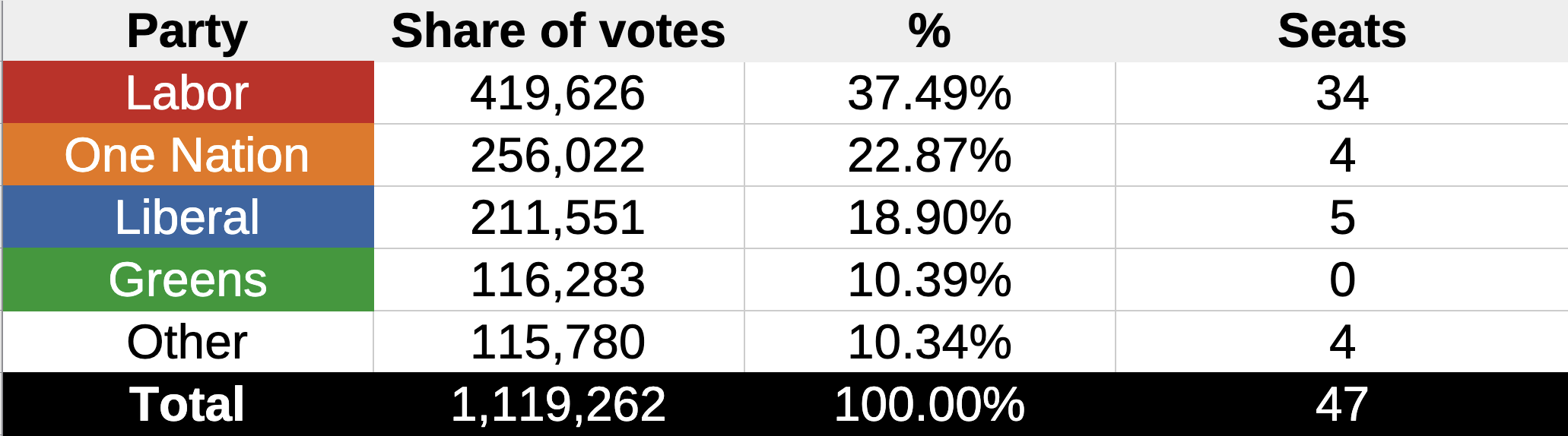
All of the four seats they won – Hammond, MacKillop, Narungga, and Ngadjuri – had either been held by Liberal incumbents or by independents who were former Liberals. Given we are here examining the threat One Nation poses to the Nationals in Victoria, we'll ignore the metropolitan seats where One Nation threatened Labor for now, and only look at these four Liberal seats that the party managed to win. These seats are all predominantly country seats, and while the comparison of regional Liberal to Victorian National is not one-to-one, it is likely as perfect of an analysis as we'll get.
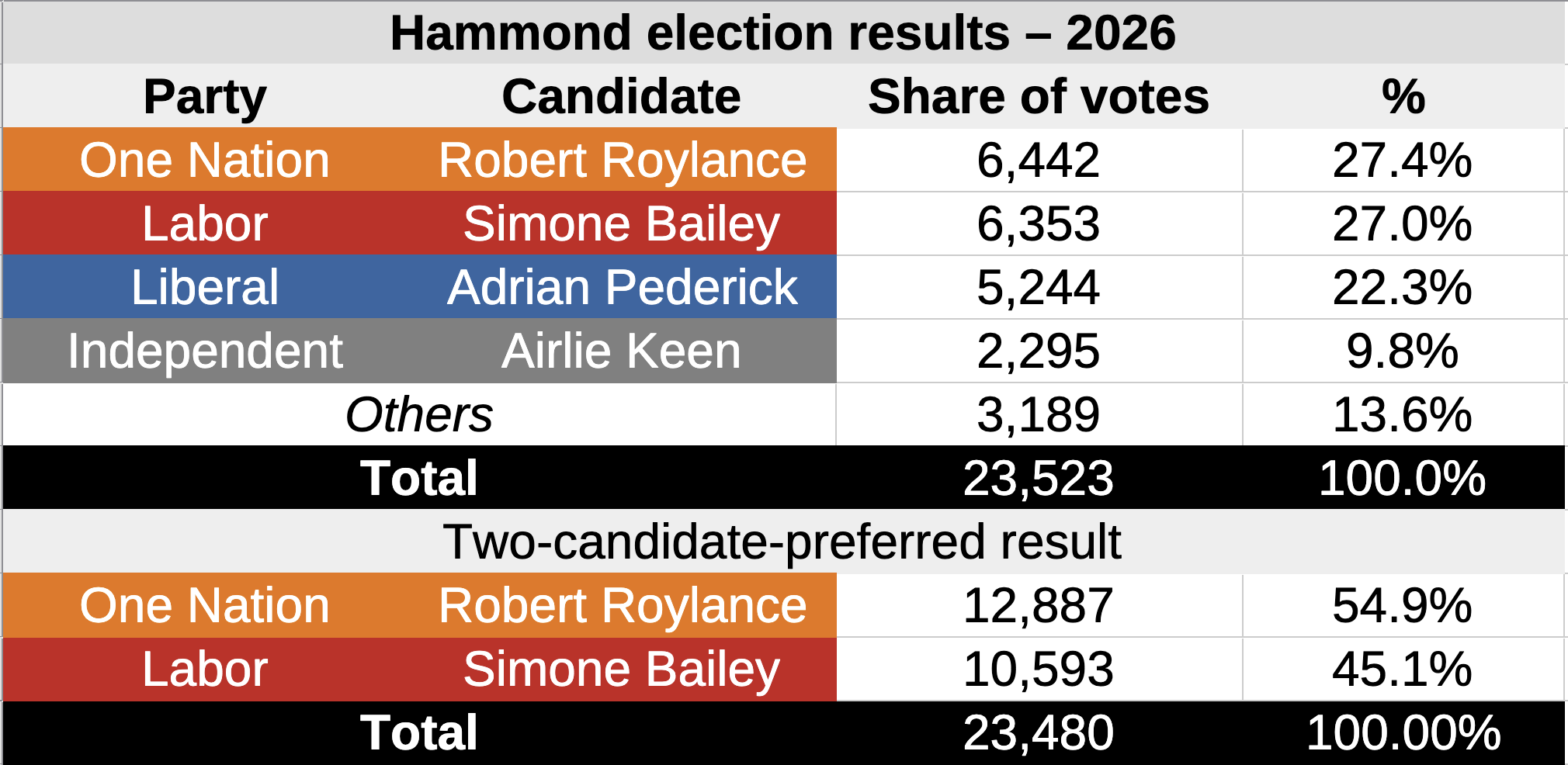
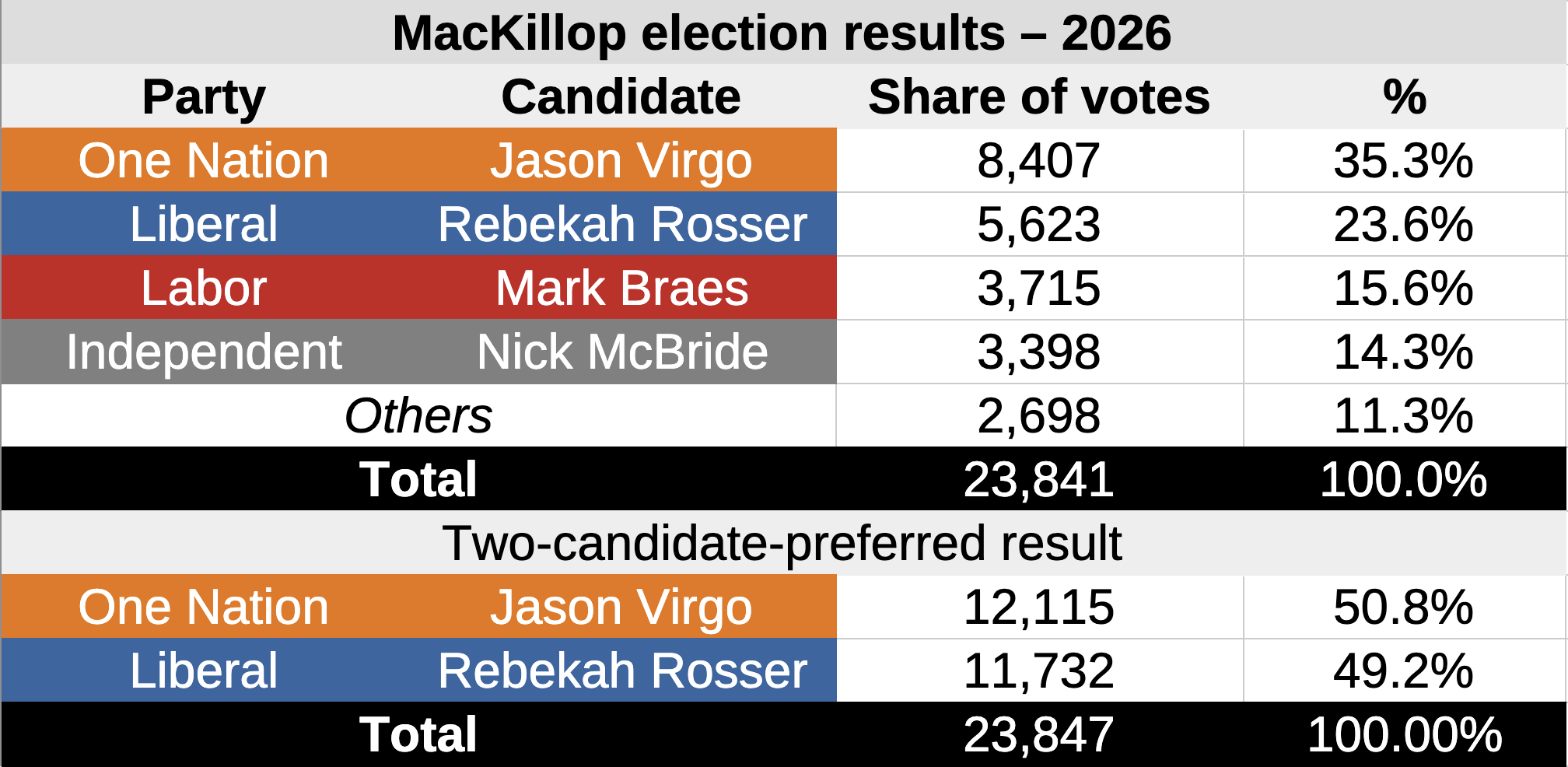
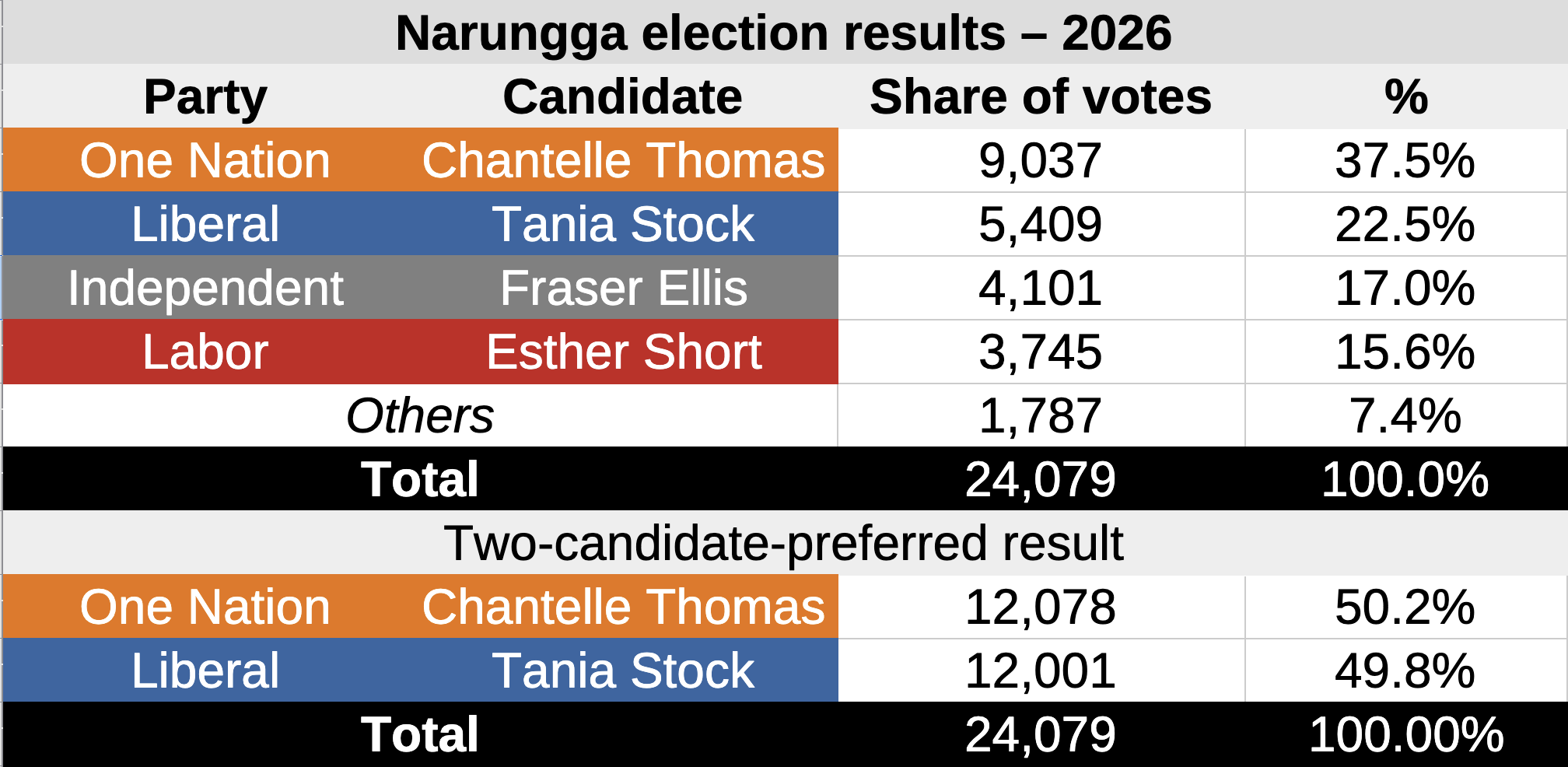
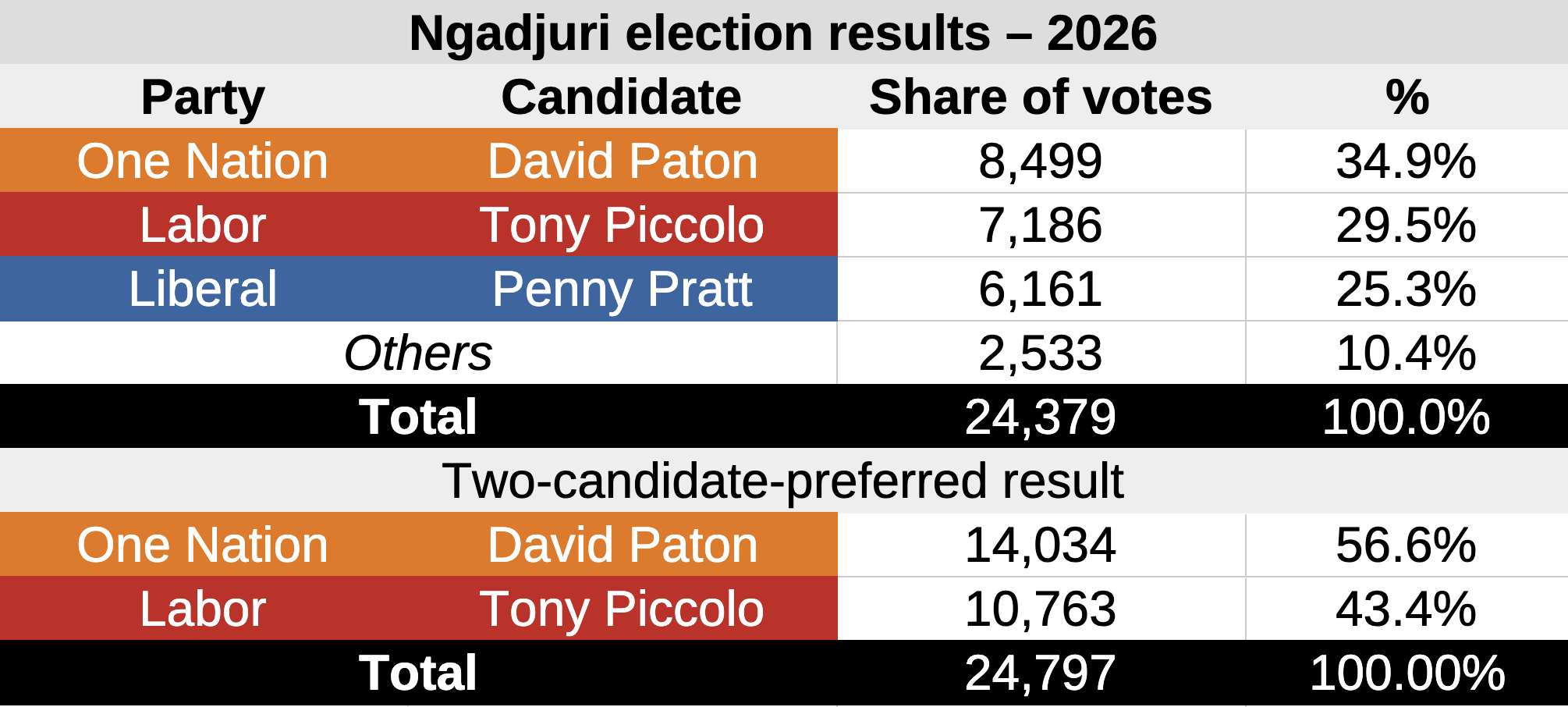
Headline results in the four seats won by One Nation at the 2026 state election. Source: Electoral Commission of South Australia
You'll notice a few things here. Firstly, half of One Nation's seats were won against Labor in the final two-candidate-preferred, and the other half against a Liberal candidate. One Nation tends to win by more against a Labor candidate, and the two races where they faced a Liberal candidate both involved independents.
In Narungga's case, ex-Liberal Fraser Ellis had been re-elected fairly easily in 2022 but then found guilty of deception in 2024 over misuse of the Country Members Accommodation Allowance. MacKillop's Nick McBride left the Liberal Party in July 2023, but was arrested in late 2025 over the alleged assault of his wife, and campaigned for re-election in an ankle bracelet.
In Hammond, the Liberal Adrian Pederick was the incumbent, but got supplanted both by One Nation and Labor on primary votes, and his preferences elected Robert Roylance of One Nation. Penny Pratt was also the incumbent in Ngadjuri, known as Frome at the previous election, but Ngadjuri was actually being contested by two incumbents. Frome in 2022 had been won by Pratt by 8.2 per cent, but electoral redistribution gave it a 3.3 per cent margin, taking up a chunk of the Gawler. Tony Piccolo, the MP for the neighbouring seat of Light, fancied his chances in the redrawn Ngadjuri, and so hopped over to contest that seat instead. As psephologist Kevin Bonham wryly remarked, "this must have seemed like a good idea to someone at the time".
The results were such that Labor not only lost Ngadjuri but almost lost Light to One Nation. Piccolo performed well enough to reach the final 2CP but Pratt's preferences favoured Paton, electing One Nation easily.
But had Piccolo not had the profile he had (which surely must have counted for something), and had Labor not won the state election in a landslide, Ngadjuri very well might have been a contest between One Nation and the Liberals. Who would have won that?
Probably not One Nation, as it turns out. You'll notice that in both MacKillop and Narungga, One Nation had a massive primary vote lead that got whittled down to a comparatively small two-candidate-preferred margin.
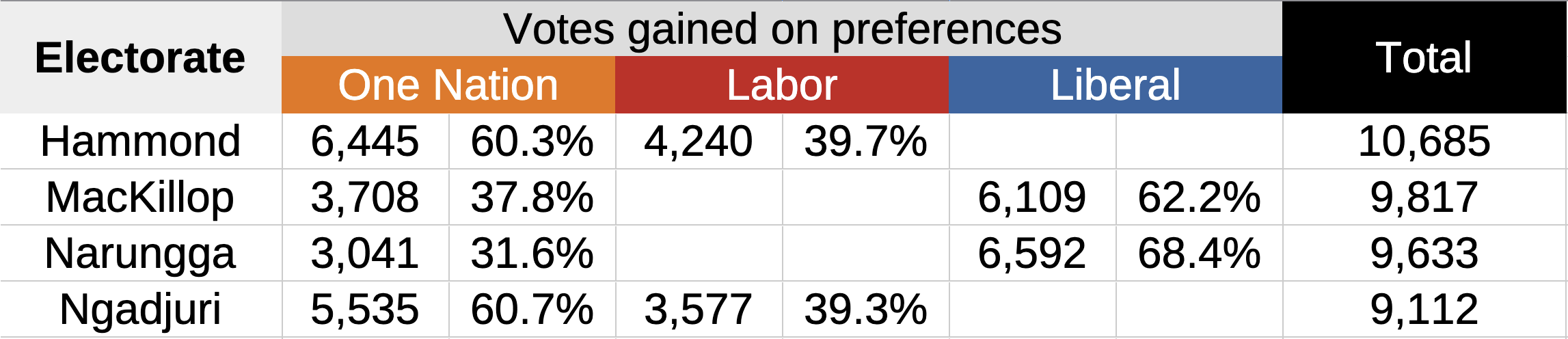
This owes mainly to a remarkable flow of Labor preferences to the Liberal over One Nation.
The statistics I am about to present are imperfect, they show only stages in the distribution of preferences. Unlike the Australian Electoral Commission, the Electoral Commission of South Australia does not publish the two-candidate-preferred preference flow directly, so we cannot say directly what the preferences were of voters who first-preferenced Labor. In Maranoa at the 2025 federal election (the one seat where Labor preferences were distributed and One Nation made the final two), we know 57.9% of Labor voters preferenced the LNP, while 42.1% preferenced One Nation. The following figures only represent the distribution of Labor's preferences, so should be taken with a grain of salt. But hooly dooly, check this out.
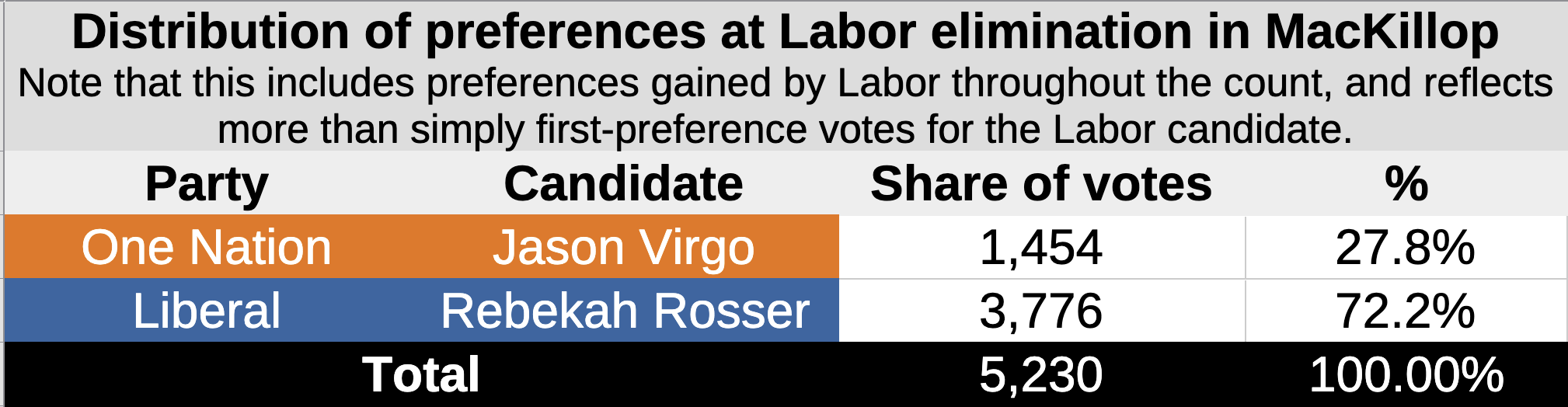
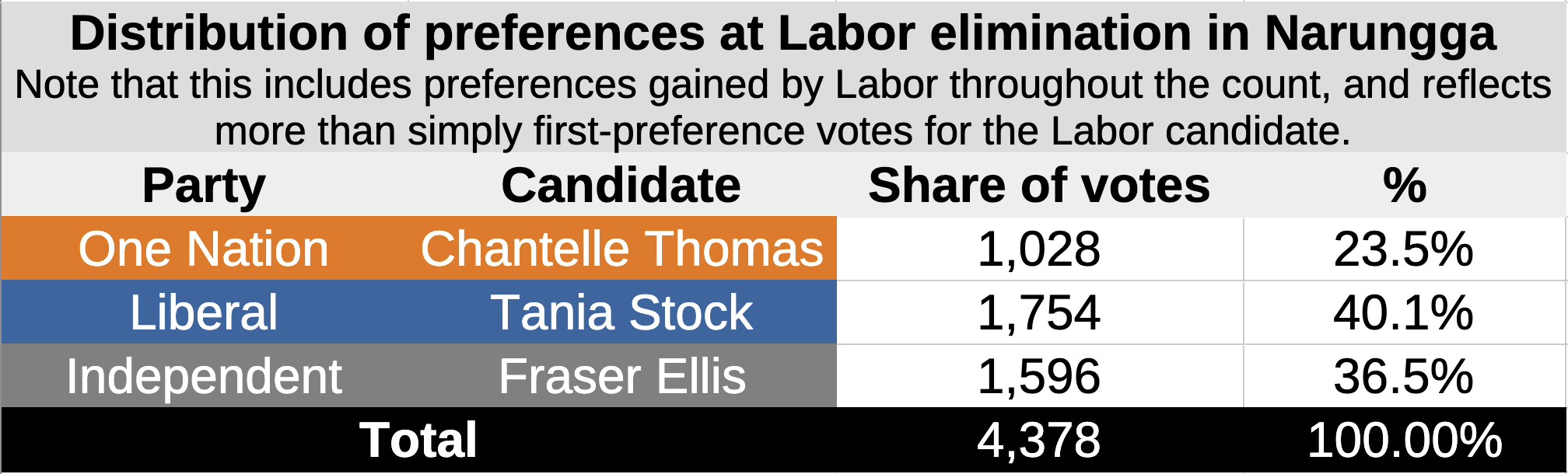
In MacKillop, Labor's were the final preferences to be distributed. (Nick McBride's preferences split 42/41/17 to One Nation/Liberal/Labor.) Labor preferences were the second-last to be distributed in Narungga, and Fraser Ellis' split strongly to the Liberals also, going 75/25.
Again, both MacKillop and Narungga are complicated by the presence of ex-Liberals, which you could argue helped the Liberals and disadvantaged One Nation. While ~15% of the vote in both seats were with these independents, perhaps they were always going to go back to the Liberals, making the One Nation primary vote lead more fallible than it seemed.
And this might indeed be true in Narungga, where Fraser Ellis' preferences broke strongly to the Liberal, but in MacKillop it seems to not be true. Nick McBride's preferences didn't seem to strongly favour the Liberal Party. Even assuming that the 17% that went from McBride to Labor went right back to the Liberals when Labor was eliminated, a 42/58 split is hardly an overwhelming flow to one side of politics. The data doesn't seem to support the idea that these independents were, more or less, always behaving like quasi-Liberals. Instead it seems to suggest that the left-wing vote is sharply going against One Nation.
There were two other seats where One Nation made the 2CP against the Liberals, both of which they lost. These were Chaffey and Flinders, per Antony Green's invaluable draft analysis. The summary of results in these seats, and how preferences favoured each side, are listed below:
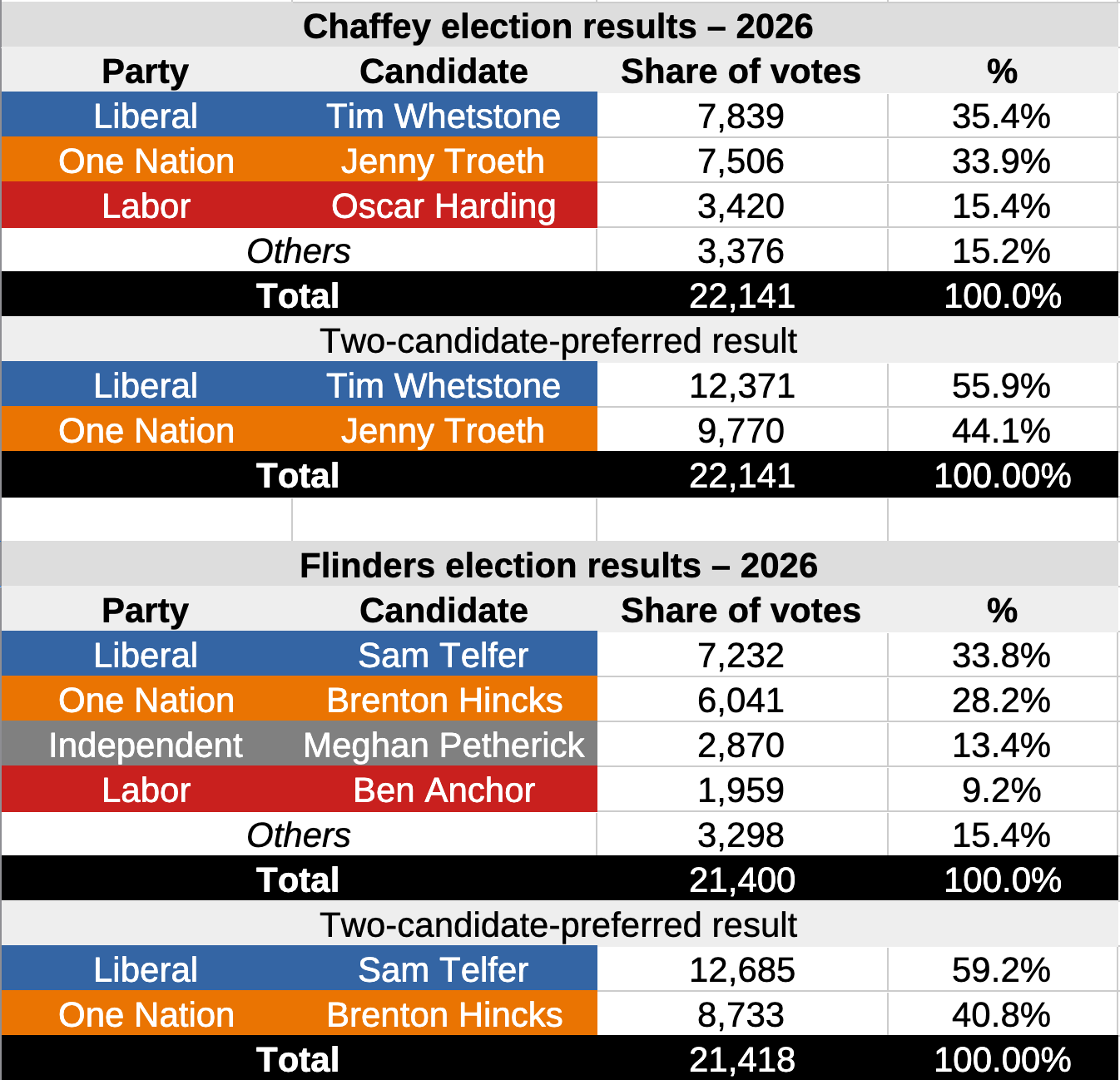

Again, you will note a pattern of One Nation doing very poor on preferences. Small primary vote leads for the Liberal candidate are inflated by preferences. Flinders has the factor of an independent, Meghan Petherick (not a former Liberal of any variety), but Chaffey does not. There are a few other regional seats where One Nation made the final two – in Mount Gambier and Stuart they finished second to independents – but I believe I've sufficiently demonstrated my point. If One Nation wants to claim seats, they don't just need to lead on primary votes, they need to have a stonking lead on primary votes, or be lucky enough to face the Labor Party in the two-candidate-preferred count, where they are liable to benefit from right-of-centre preferences. (Note that the Liberal Party explicitly preferenced One Nation in South Australia.)
With that done, let's look at the Nepean and Farrer by-election. One a dream scenario for the Coalition, the other a warning.
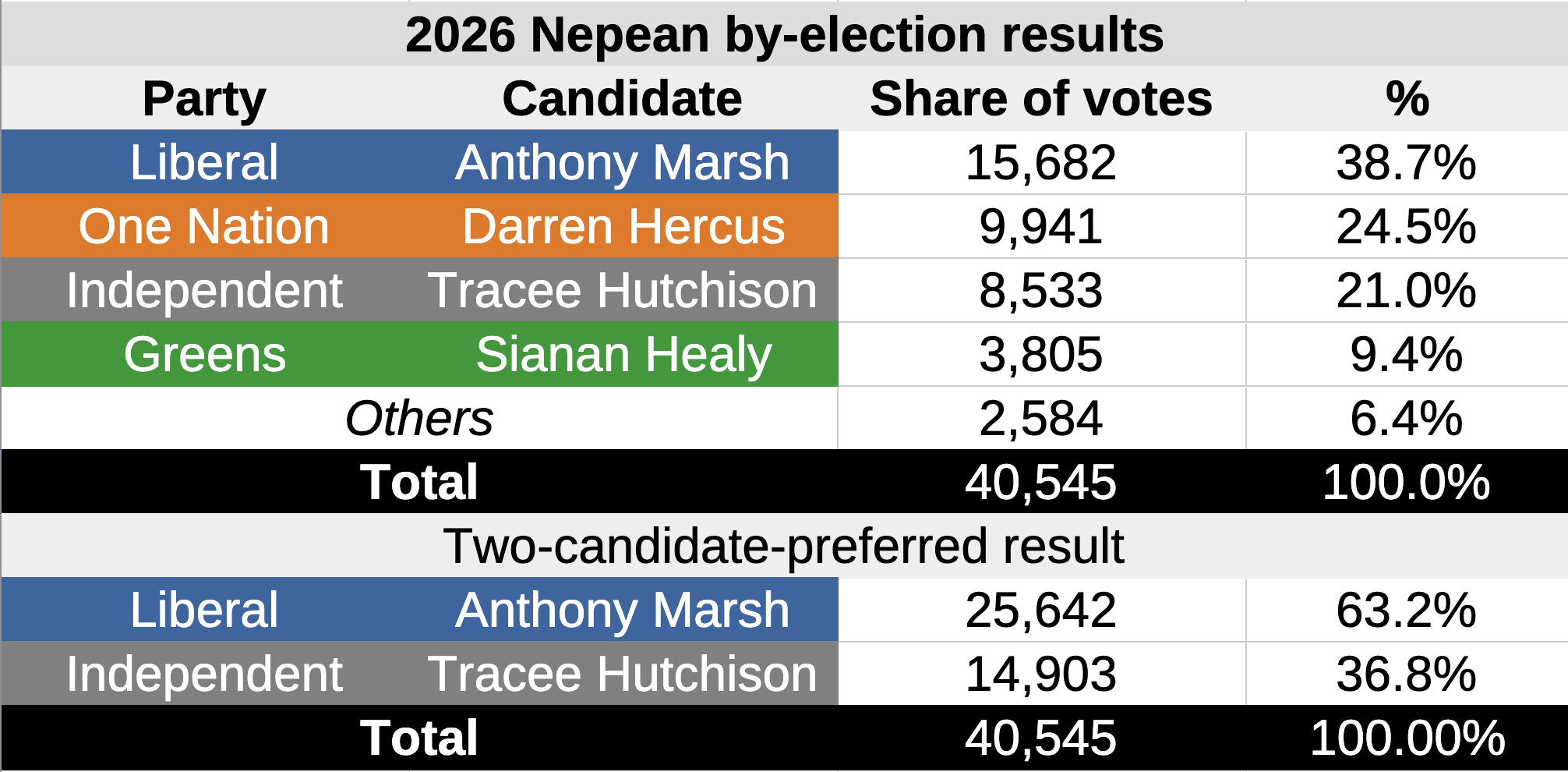
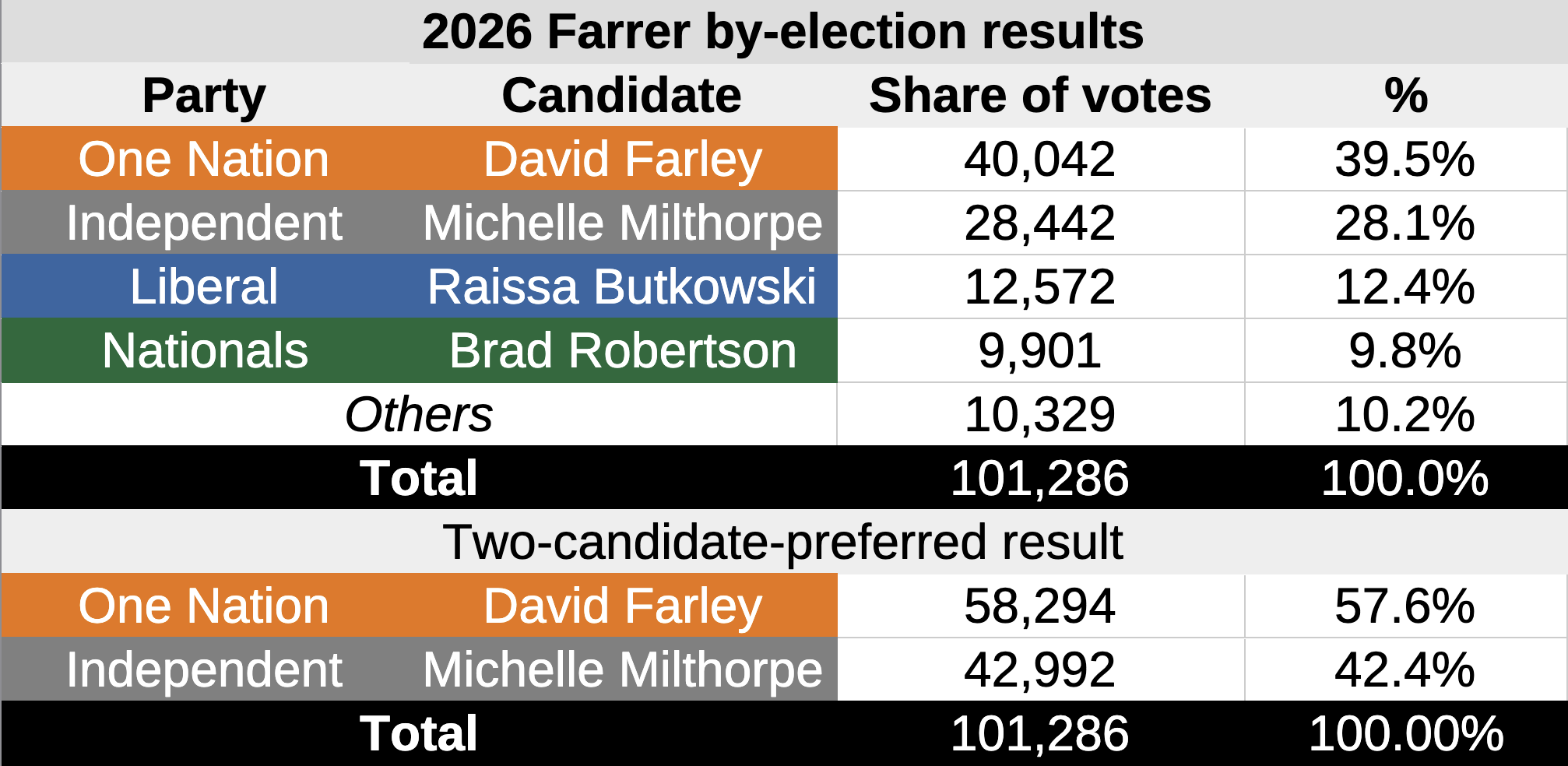
Source: Victorian Electoral Commission, Australian Electoral Commission
Nepean is a wealthy coastal seat that is traditionally very safe territory for the Liberal Party, while Farrer is a regional seat covering large tracts of agricultural land vacated by a Liberal MP who had just been booted from the party leadership. (Although Nepean's MP had also left under acrimonious circumstances.)
In Nepean, the Liberal candidate finished far enough ahead that there was no chance he would fall out as preferences were distributed. No matter who he faced in the final count, he was likely to win, as One Nation preferences ended up favouring him over the leftish independent, and if One Nation had reached the final count, the leftish independent's preferences were like to favour the Liberal Party over them. (As also observed by ABC election analyst Casey Briggs.) As you can see, the Liberal candidate in Nepean gained handsomely on preferences and won easily.
In Farrer, though, the combined Coalition vote was lower than a quarter. This meant neither the Liberal or Nationals could reach One Nation by the final count, and the One Nation candidate faced independent Michelle Milthorpe. Preferences in Farrer slightly favoured Farley (though not as much as in the straightforward One Nation v Labor races discussed earlier), and he also won quite easily. But even if preferences in Farrer had split more to Milthorpe, the Coalition was still doomed here. They had simply polled so low that they would have required a fairly implausible spread of preferences to make the final two.
So, what does this all mean for the Victorian Nationals, the initial inspiration behind this post? What does it mean for One Nation's chances in conservative rural seats?
Well, I think it means a few things. The seats where One Nation did the best after preferences in South Australia were the seats where they had the good fortune to face the Labor Party. The Labor Party won in a landslide in South Australia, which inflated their vote in seats they would never otherwise usually contend in. In normal circumstances, the conservative vote in Ngadjuri and Hammond likely would have been big enough to split two ways without Labor coming in through the middle.
And, well, in Victoria, indications are that the Labor Party is much less popular. They're currently neck-and-neck on a two-party-preferred basis, and it seems as if Labor is especially unpopular in regional Victoria. A recent Roy Morgan poll gives Premier Jacinta Allan a shockingly low approval rating of 32.5%, and there is even speculation that Allan might lose her seat of Bendigo East.
The Victorian Nationals won nine seats in 2022 – Euroa, Gippsland East, Gippsland South, Lowan, Mildura, Morwell, Murray Plains, Ovens Valley, and Shepparton. While the Nationals faced independents as their primary opponents in Mildura and Shepparton, most all of their seats are safe against Labor, excepting the Latrobe Valley seat of Morwell. In some of these seats, like Lowan and Murray Plains, the Nationals vote could split perfectly and Labor would still not make the 2CP
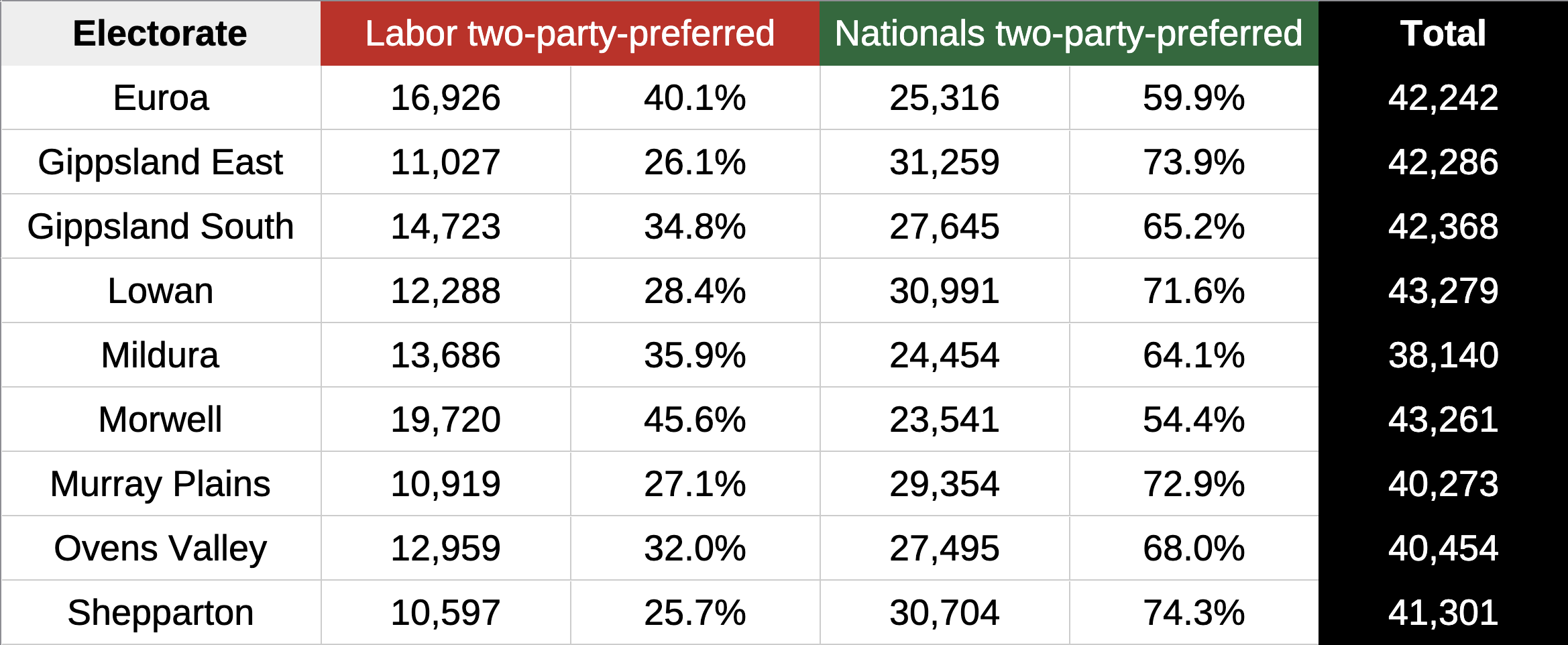
And given the 2022 results are, if anything, a high-water mark for the ALP, it seems unlikely that One Nation will be likely to claim any seats off the Nats by simply facing Labor in the final count. Instead, what they will need to do is not only outpoll the Victorian Nationals, but outpoll them by a good degree, if the preference flows in South Australia are any indication.
Yes, One Nation happened to win the four seats in South Australia they led in primary votes. But the fact that they didn't get overtaken is more an accident of statistics – in MacKillop, One Nation's 11.7% primary vote lead was whittled down to 1.6% after preferences, and in Narungga, their 15% lead was almost overturned, falling to 0.4%.
One Nation will need a big lead over the Nationals to win any seat from them if this holds true in Victoria. Obviously, again, this comparison is not perfect. Rural Liberals in South Australia are not the same as Nationals in Victoria, but it's a fairly decent comparison, given the Nationals in Victoria tend to be more moderate than other states, and South Australian rural seats look similar to Victorian ones.
I have no idea what the actual results in Victoria will look like for the Nationals. Maybe a comparatively stronger Coalition vote drives One Nation away, like in Nepean. Maybe the One Nation vote surges so high that the Coalition is almost wiped out in the country, as Farrer could indicate. But I will say that based off my analysis of One Nation's electoral figures, they will not be able to win regional seats simply by polling slightly higher than the Nationals.
South Australia suggests that preferences swing hard against One Nation when they face other conservative candidates. Unless they happen to face Labor or an independent in the final distribution of preferences, they will likely either need to win close to an outright primary vote majority to claim seats, or to poll far enough ahead, such as by 10 per cent or more, that they cannot be caught on preferences.
The Victorian Nationals might be harmed by the retirement of long-time MPs like Peter Walsh in Murray Plains and Tim Bull in Gippsland East. But barring a truly horrid primary vote swing against them in country seats, the sort that would make them a distant second against One Nation, they are likely favourites.
It's certainly probable that One Nation will win some regional seats, but I wouldn't be shocked at all to see some Nationals win from behind, by virtue of cleaning up on preferences. To win in the Victorian regions, One Nation will need more than to simply overtake the Nationals or the Coalition. They will need a landslide.
An earlier version of this post listed incorrect names for candidates in Flinders. This has been amended.